
Time for Sale
Other PeopleThis flow traces time as something people sell, spend, fear, and try to outrun.
increasing Bearing strength in each event
 decreasing
Bearing strength in each eventdecreasingTime Without Measure

Time Without Measure
Mary’s Exact Present
Mary can often tell the time but knows little about what time means to other people. Her perceptions hold details without arranging them into a familiar past and future.
A Different Experience
The present is vivid and crowded, while personal history remains mist. The contrast makes time feel less like a neutral measure than a structure Mary has not yet learned to inhabit.
The Exchange of Hours
The Exchange of Hours
Work as Sale
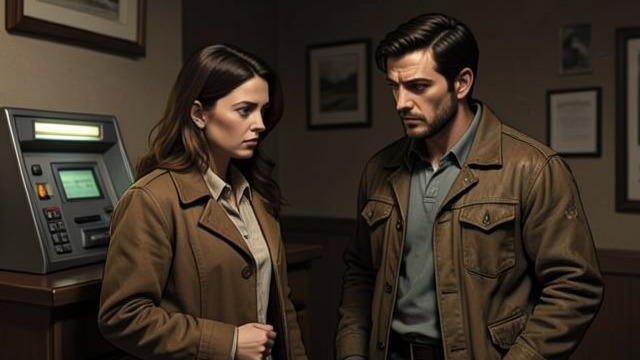
Mary learns that people sell their time for money, while tramps refuse that transaction and remain poor. She gradually sees that employment makes time pass within an accepted social order.
Freedom’s Cost
The tramps’ choice is not romantic freedom: they think constantly about money they do not have. The exchange can be oppressive, yet refusing it does not remove material need.
The Race of Seconds

The Race of Seconds
Time as Motion
The narrator imagines each second as a runner or relay carrying time forward. The image makes everyday duration feel effortful and finite.
An Approaching End
The repeated thought that time itself will end gives ordinary life a cosmic pressure. Mary, still new to time, experiences this as part of a world whose rules remain uncertain.
Time in the Hostel

Time in the Hostel
Waiting Without Money
When Mary has no job, the hours on the street pass slowly. She watches other people work and wonders how they found someone willing to buy their time.
Work Restores Sequence
The café job supplies hours, wages, and recurring tasks. Paid work does not solve Mary’s identity crisis, but it makes the immediate day feel more navigable.
Time’s Final Claim
Time’s Final Claim
A Life That Feels Long
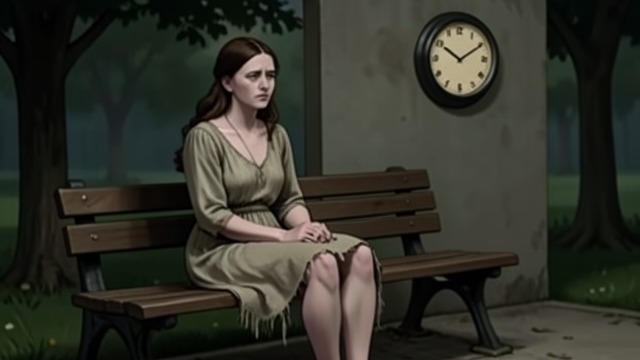
Amy rejects the familiar claim that life is too short, saying that it has become too long for her. Her exhaustion turns time from a resource to be spent into a burden that she has already endured.
Return Rather Than Escape
The ending restarts life at childhood instead of granting a definitive escape from time. The cycle suggests that another beginning is possible, while refusing to promise that history will not recur.
The first day in London
During Mary’s conversations with the tramps
During Mary’s time with the Bothams
During Mary’s job search
Near the ending
